Introduction
Have you ever woken up feeling tired even after a full night’s sleep? Or maybe you’ve noticed that on some mornings you feel unusually refreshed, but you don’t know why. Most people experience this confusion every day—because even though we spend one-third of our lives asleep, we understand very little about what our body does at night. And that is exactly why smartwatch sleep tracking has become such a powerful modern tool. Today, smartwatches don’t just tell time—they reveal hidden patterns, analyze your night in incredible detail, and guide you toward better health without you even noticing. If you’ve ever wondered what your smartwatch knows about your sleep or how accurate these insights really are, this guide will explain everything in the simplest way possible.
This blog will walk you through how sleep tracking works, what data your smartwatch uses, how deep sleep, REM sleep, and disturbances are measured, and what “hidden sleep patterns” actually mean. You’ll also learn how this information can transform your daily performance, mental clarity, and long-term wellness. By the end, you’ll understand exactly why sleep tracking has become one of the most valued smartwatch features—and how it can genuinely help you become healthier.
What Smartwatch Sleep Tracking Really Measures
When most people hear “sleep tracking,” they assume their smartwatch just tracks how long they slept. But the truth is much more complex. Modern smartwatches use a combination of sensors and algorithms to measure:
• Heart rate changes
• Breathing rate
• Body movement
• Blood oxygen variations
• Skin temperature shifts
• Micro-disturbances during the night
These numbers are then processed to predict which stage of sleep you’re in, how long you stay there, and whether your sleep is restorative or stressed. This is where things get interesting—because the data your watch collects reveals patterns you would never notice on your own.
How Smartwatches Detect Light, Deep, and REM Sleep
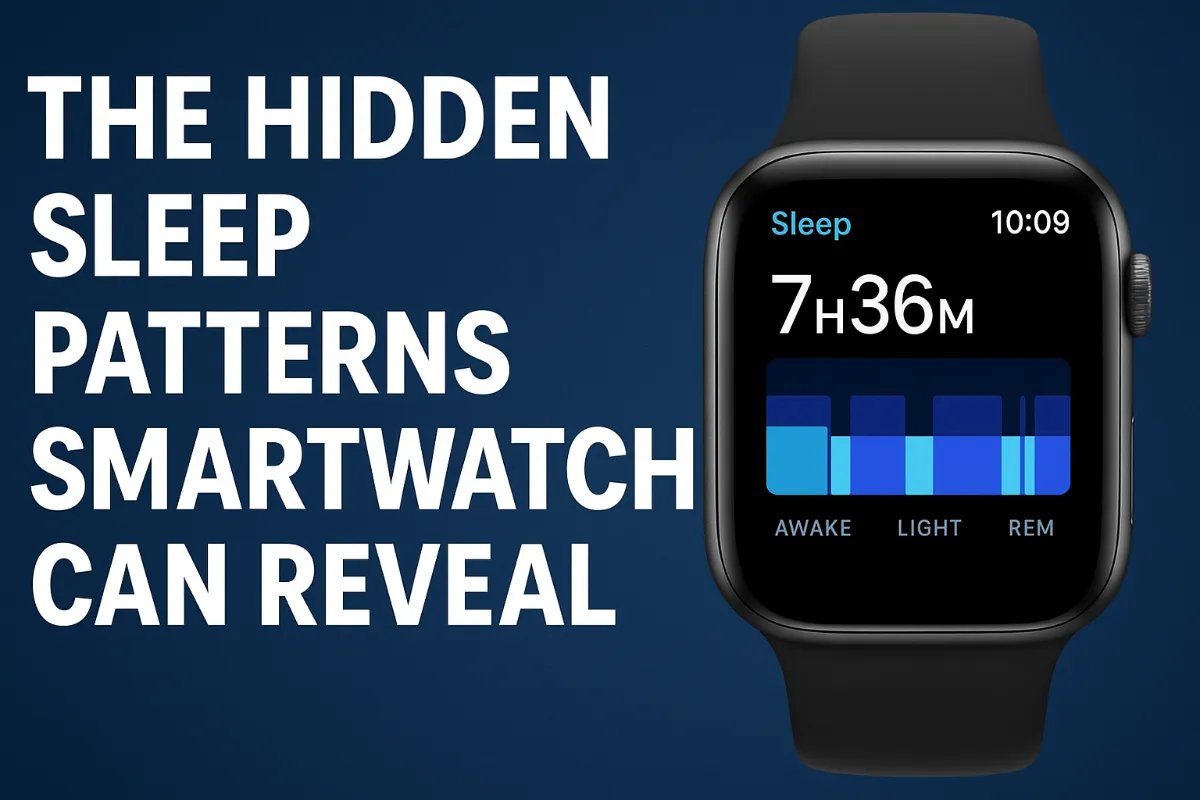
Sleep is not one long straight line. It is a repeating cycle made of three main stages. Smartwatches estimate these stages using something called actigraphy (movement tracking) combined with heart-rate variability and oxygen data from optical sensors.
Light Sleep
This is when your heart rate begins to slow and your muscles relax. Your smartwatch recognizes this stage when your movement becomes minimal and your heart rhythm stabilizes.
Deep Sleep
Deep sleep is the most restorative stage for your physical body. Smartwatches detect it through slow, steady breathing and very low body movement. If your deep sleep is low, you may feel fatigued even after long hours of rest.
REM Sleep
This is the dream stage. Smartwatches track REM through rapid heart-rate changes and a unique pattern in your micro-movements. REM sleep is essential for memory, emotions, and learning.
Each of these patterns tells a different story about your health.
The Hidden Patterns Smartwatches Can Reveal
Smartwatch sleep tracking can uncover sleep patterns that you might have ignored your entire life. These hidden insights help explain why you feel the way you do during the day.
Irregular Sleep Cycles
If your sleep stages are inconsistent from night to night, it can indicate stress, anxiety, or lifestyle disruptions. Many users don’t even notice how inconsistent their sleep truly is until they see the data.
Frequent Micro-Awakenings
Your smartwatch can detect brief awakenings lasting only a few seconds. These awakenings often happen due to temperature, noise, stress, or breathing irregularities. Even though you don’t remember them, they affect your energy levels.
Breathing Irregularities
Some smartwatches track your SpO2 (blood oxygen levels) during sleep. Repeated drops can indicate early signs of sleep apnea or breathing problems. These patterns are often invisible without tracking technology.
Heart-Rate Variability Changes
A sudden shift in heart-rate variability can reveal late-night stress, anxiety, alcohol impact, or even sickness before you feel symptoms.
Restlessness and Movement
Some people move so much during sleep that they burn extra calories without even knowing it. This can indicate discomfort, stress, or poor sleep environment.
Why These Patterns Matter More Than You Think
Most people underestimate how deeply sleep affects their entire day. Poor sleep patterns can:
• Reduce focus and memory
• Lower emotional stability
• Increase stress levels
• Slow metabolism
• Reduce athletic performance
• Increase cravings and hunger
• Affect skin health and recovery
Sleep tracking helps you identify what’s hurting your sleep and gives you the chance to fix it.
Technology Behind Sleep Accuracy
Smartwatches use advanced sensors that were once available only in medical labs. Optical heart sensors, accelerometers, gyroscopes, and temperature sensors work together to create detailed sleep reports. While not as perfect as clinical sleep studies, smartwatch accuracy has dramatically improved—especially with recent advancements in AI sleep scoring models and machine-learning-based motion interpretation.
How You Can Use Smartwatch Sleep Insights to Improve Your Nights
Once you understand your hidden sleep patterns, you can start improving them. Smartwatches often guide you with simple suggestions like:
• Going to bed earlier
• Reducing caffeine late in the day
• Improving your bedroom temperature
• Managing nighttime light exposure
• Practicing relaxation before sleep
• Maintaining consistent sleep schedules
Even small changes can dramatically improve your sleep cycles.
Common Mistakes People Make When Reading Sleep Data
While sleep data is helpful, many users misunderstand the numbers. For example:
• More deep sleep is not always better; too much can signal exhaustion
• Low REM sleep can be caused by stress, not a health issue
• Sleep scores vary naturally—no need to panic over one bad night
Understanding these details helps you use your data wisely rather than fearfully.
Are Smartwatches Really Accurate?
Studies from the Sleep Research Society and Harvard Medical School show that smartwatches are highly reliable for tracking general sleep patterns, total sleep duration, and disturbances. They are slightly less accurate in identifying exact sleep stages—but they are incredibly useful for long-term insight and lifestyle optimization.
The Future of Sleep Tracking
Smartwatch sleep tracking is evolving fast. Future watches may track brain waves, hydration levels, emotional stress, and even predict dreams based on neural patterns. The more advanced the sensors become, the more accurate your sleep insights will be.
Conclusion
Your smartwatch is more than a fitness accessory—it’s a window into a part of your life you never get to see. By uncovering hidden sleep patterns, tracking your breathing, analyzing movement, and studying heart-rate changes, it reveals why you feel tired, energized, stressed, or refreshed. These insights help you build healthier habits, improve your performance, and understand your body like never before. If you’ve never paid attention to your sleep data, now is the perfect time to start. Your best mornings begin with better nights, and your smartwatch is ready to guide you—one sleep cycle at a time.